

Many overseas independent site operators and foreign trade B2B teams have recently encountered the same strange phenomenon: when they open their backend to check core keyword rankings, they are still stably in the top three on Google's first page, but the website's organic click-through rate (CTR) and inquiry volume are quietly bleeding.
The reason is not that your backlinks have dropped or there is a loophole in your technical architecture, but that the underlying distribution logic of the search engine results page (SERP) has changed. Entering 2026, with Google AI Overviews and AI Mode fully rolled out in more than 200 countries and regions worldwide, and buyers increasingly accustomed to directly asking ChatGPT or Perplexity to find suppliers, the traditional "ten blue links" have officially taken a back seat.
The industry calls this round of drastic change a leap from traditional SEO to GEO (Generative Engine Optimization). Before this, we already discussed How to Choose Google SEO Tools: Don't Buy a Full SaaS Suite Right Away, Build a Four-Layer Tool Stack According to Your Site Building Stage, helping everyone clarify how to save money and avoid pitfalls when building a site from 0 to 1. But when your site has already passed basic indexing and begun to face the impact of "Zero-Click Search" in 2026, the Google SEO tools in your hands can no longer just focus on "checking keyword frequency and looking at rankings"; instead, you need to restructure your workflow around "how to make AI understand, trust, and directly cite my web pages."
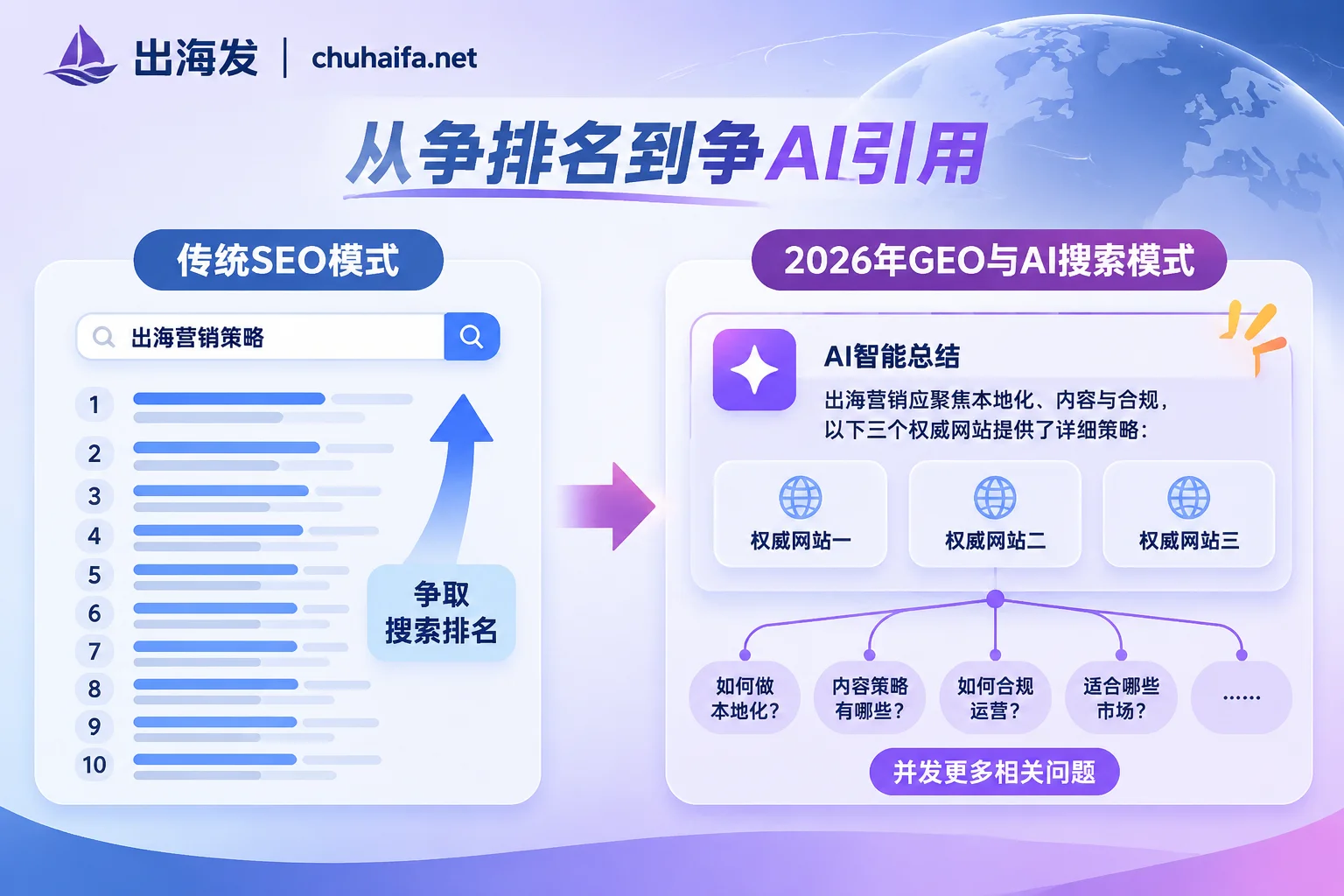
1. Why Has an SEO Tool Combination That Only Looks at "Keyword Rankings" Failed?
In Google's latest official generative AI search guide, two core mechanisms supporting AI Overviews are explicitly mentioned: Retrieval-Augmented Generation (RAG) and Query Fan-out.
Simply put, when an overseas buyer searches for a product or solution, Google's AI not only grabs high-authority web pages from the index database, but also automatically generates a series of related sub-questions in parallel in the background (i.e., query fan-out), piecing together answers from multiple dimensions into a summary and feeding it directly to the user. This directly triggers a chain reaction at three tool levels:
- CTR for informational long-tail keywords plummets, but the value of "Citation" soars: Multiple third-party monitoring data in 2026 show that the organic CTR of terms triggering AI Overviews has dropped by more than half on average. But once your page is included as a source in the summary card by AI, the visitors who click through are often high-intent customers who have already read the basic information and are ready to compare prices or place orders.
- High-priced commercial SEO suites show an "AI premium": Established giants (such as Ahrefs, Semrush, etc.) have launched modules like AI Search Tracking or Brand Radar, but often bundle these features into high-tier plans costing nearly $200/month, or charge extra based on monitored terms. If you follow the trend and buy everything, a small team's budget simply cannot bear it (for how to cut redundant subscriptions, you can refer to How to Choose Cross-Border E-Commerce Tools Without Wasting Money: Say Goodbye to SaaS Redundant Subscriptions and Slim Down Your Toolbox with a Four-Layer Architecture).
- Limitations of the new GSC reports: Although Google Search Console updated its much-anticipated "Generative AI Performance Report" in 2026, it mixes AI Overviews and AI Mode impressions together and does not directly reveal specific RAG fan-out query terms. Relying solely on the official backend still leaves you "half-blind."
Therefore, the core idea for equipping Google SEO tools at this stage is to move budget away from "pure ranking monitoring" and reassemble it according to four modules: "Intent and Fan-out Mining—High-Citation Content Engineering—Sitewide Brand Mentions—AI Visibility Attribution."
2. The Four Major Modules of the 2026 Practical Google SEO and GEO Tool Stack
To capture traffic from both traditional organic search and AI-generated answers, you don't need to buy the most expensive enterprise-level all-in-one suite; instead, you need to twist lightweight tools from different lanes into a single rope.
1. Intent Capture and "Query Fan-out" Mining Layer: From Finding Single Keywords to Finding Question Clusters
In the past, when using keyword tools, everyone was used to sorting by monthly search volume (Volume) from high to low and picking low-KD (keyword difficulty) ones to write about. But in the AI search era, pages that mechanically stuff keywords were already washed out in the March 2026 core algorithm update. What you need to know now is: when users search for a main term, what related sub-questions will AI also retrieve?
- Core Configuration: Combine Google Trends + classic keyword tools + Google SERP extensions.
- Practical Workflow: First go to Google lane and open the official Google Trends and mainstream keyword tools to lock in industry macro trends and commercial intent terms; then use lightweight Google extensions to directly scrape "People Also Ask" and forum hot discussion questions on the SERP in the target site's region. Organize these scattered real questions into "Topic Clusters"—this is your best ammunition depot for dealing with AI "query fan-out."
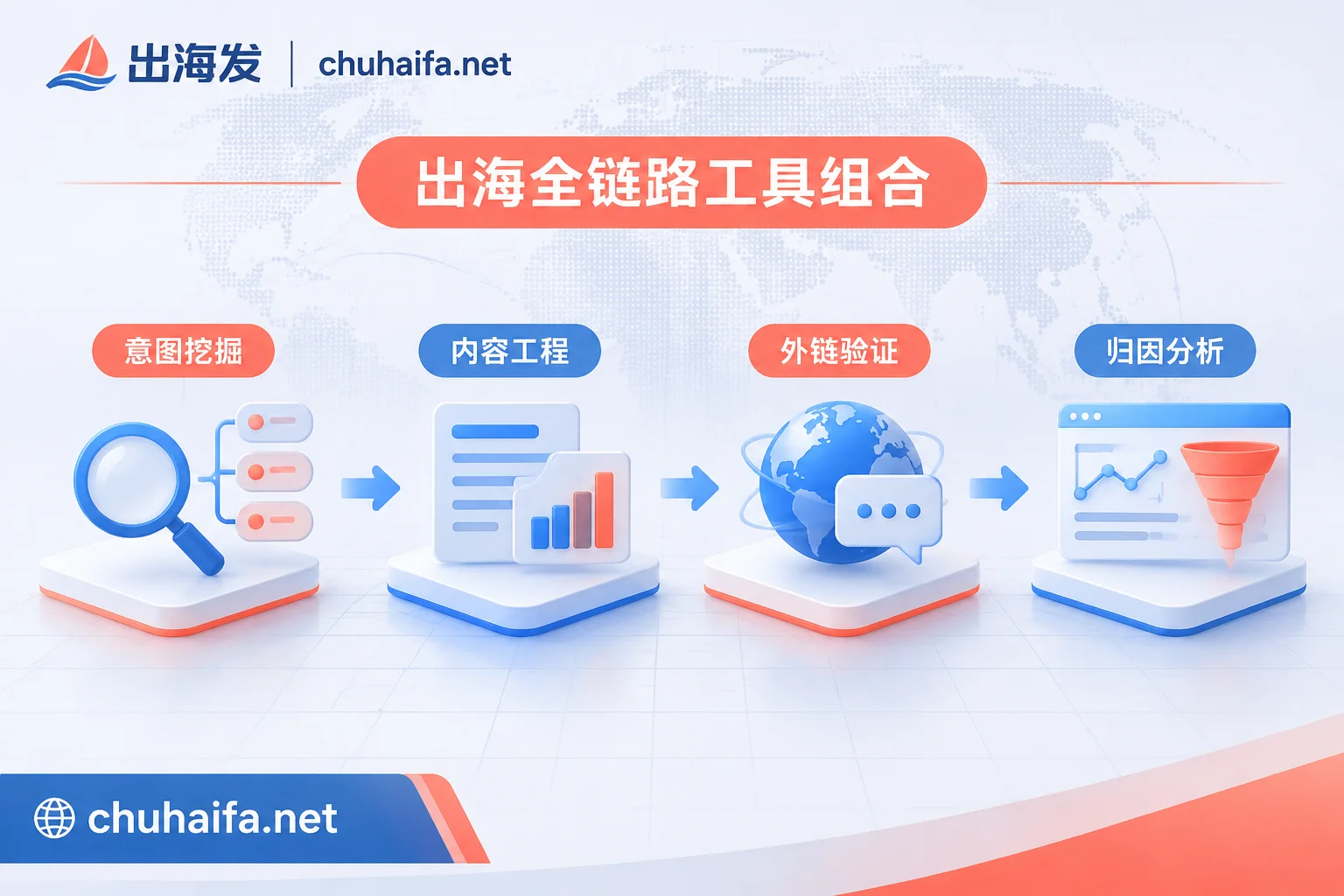
2. "High-Citation Rate" Content Engineering Layer: AI-Assisted Structuring and Injection of Real Experience
Why has your article been indexed by Google but never makes it into the AI Overviews recommendation slot? Because when large models scrape sources, they extremely favor two characteristics: "clear inverted-pyramid structure" (easy to directly excerpt into conclusions) and "support from real human experience and data (E-E-A-T)" (to prevent AI hallucinations).
Actual tests in 2026 show that pages containing original real photos, specific test parameters, and clear Schema markup have far higher ranking stability and probability of being cited by AI than pure text fluff. In daily work (for specific AI workflow setup, you can read How to Build 2026 AI Going-Global Tools: Say Goodbye to Single-Tool Stacking and Restructure Business Processes with a Three-Layer Architecture of "Efficiency-Growth-Infrastructure"), you can pair tools like this:
- Copy Structuring: Call the AI writing and AI office assistants in AI Tools. Don't let it directly generate thousands of identical pieces of nonsense; instead, let it help you rewrite professional and dry product manuals and factory test data into a highly readable structure of "H2/H3 direct questions + conclusion given directly in the first 200 words + comparison table + FAQ module."
- Multimodality and Page Implementation: AI search is fully moving toward multimodality. Through material editing, image library websites, and Lander creation tools under the Content Creation category, turn dry parameters into intuitive infographics and comparison components, compress file sizes, and write complete Alt tags so crawlers can understand the page's value at a glance.
3. Authority and Brand Mentions Layer: Break Out of the Traditional Backlink Dead End
Traditional SEO competes on the number of backlinks and DR value; under GEO logic, large models not only look at backlink authority but also value your brand's "Brand Mentions" and discussion reputation in authoritative contexts across the web. For example, real reviews on Reddit and rankings in vertical industry media are all sources that Google AI and ChatGPT scrape extremely frequently.
- Backlink and PR Outreach: Make good use of webmaster query tools, web archives (to check old domain history and competitor redesign records), and email mining tools in Common Recommendations. After you use SEO tools to dig out industry review sites or media articles that are often cited by AI, directly use email mining tools to find the contact information of the editor or author, and send outreach emails to get your brand added to their comparison lists.
- Cross-Region SERP and Multi-Perspective Verification: When many teams work on multilingual sites or localized backlinks, searching Google directly from China shows rankings and AI summaries that are completely different from what buyers in the US or Europe see. When conducting manual cross-border SERP verification or multi-account community interaction (such as reputation maintenance on Reddit and Quora), you can use overseas IP proxies in Overseas Network, or go to Going-Global Recommendations to choose NexIP with NexBrowser, restoring the real local search environment of the target market and avoiding misjudgment caused by personalized search caches.
4. Technical Audit, GSC Insights, and AI Visibility Attribution Layer
No matter how well the content fits AI's taste, if the website loads like a snail and crawler access is blocked, everything is in vain. At the same time, when traffic shifts from "direct clicks" to "first see AI recommendations, then search for brand terms to enter the site," your monitoring system must also keep up (if your team runs both paid and organic traffic in parallel, it is recommended to also refer to How to Build Google Ads Tools: Responding to AI Mode Conversational Search and New PMax Rules, Equip a Full Advertising Tool Stack According to Four Major Modules).
- Official Infrastructure Foundation: Under the Google category, Google Search Console (GSC) remains an irreplaceable primary data source. Focus on the "Generative AI Performance Report" in GSC to see overall impression trends, and combine it with GA4 (Google Analytics) to set up custom channel groupings, separating referral traffic from AI assistants such as ChatGPT and Perplexity to see conversion rates.
- Front-End Performance and Experience Troubleshooting: In the zero-click era, every visitor willing to click into the website is extremely precious. Use testing and optimization tools in Advertising Tools (speed tests, heatmaps, landing page A/B tests) to regularly check the Core Web Vitals of your independent site. Use heatmaps to see which paragraph high-intent users coming from AI summaries stay on and where they drop off in forms, so you can firmly catch SEO traffic.
3. Tool Combination Lists for Going-Global Teams of Different Sizes
To prevent everyone from falling into the anxiety of "bookmarking a bunch of tools but not knowing which one to open first every day," here are two streamlined configurations based on business scenarios:
| Team Type | Core Pain Points | Must-Have Tool Module Combination | Budget Allocation Advice |
|---|---|---|---|
| Foreign Trade B2B Factories / Lead-Generation Independent Sites | Low search volume for industry terms, long buyer decision chains, urgent need to enter AI procurement recommendation lists | GSC + GA4 (free foundation) + lightweight keyword/question scraping extensions + AI writing structuring tools + email mining tools (for industry media mentions) | Spend 80% of effort on organizing engineers' real Q&A and industry media PR outreach; only buy lightweight monthly versions of tools. |
| Cross-Border DTC Brands / Multi-Site Sellers | Many SKUs, severe decline in informational keyword traffic, need to monitor search performance and conversions in multiple countries | Mainstream all-in-one SEO suite (choose one of Ahrefs or Semrush) + web speed testing and heatmap tools + overseas proxy IP/fingerprint environments (multi-country SERP verification and social media reputation) | Cut duplicate comprehensive SEO suites, keep one core keyword database account, and invest the saved budget in landing page speed testing and heatmap optimization. |
4. Conclusion: Use the Navigation Site to Build Your "Search Growth Workbench"
In 2026, Google SEO is no longer a game where you can lie back and win by using some "god-tier software" to one-click generate hundreds of fluff articles. Whether it's addressing the zero-click challenge of Google AI Overviews or laying out GEO to seize citation slots in generative AI, the value of tools always lies in saving you time on mechanical troubleshooting and leaving your energy for real user intent and product expertise.
If you are sorting out or streamlining your team's daily toolbox, you don't need to struggle back and forth among dozens of scattered bookmarks and search results of doubtful authenticity. Just open Chuhaifa and go to the specially organized Google, AI Tools, and Common Recommendations lanes. Whether it's Google's official backend, third-party SEO extensions, or webmaster troubleshooting tools, every listing provides a direct link to the official website with no intermediate redirect pages. Pick out the few that suit you according to the four modules above, and today you can set up a growth workbench adapted to the AI search era.