For small teams that have just set up an independent website, one of the most common pitfalls when preparing for organic search traffic is: before writing even ten articles, they spend hundreds of dollars a month on a top-tier overseas SEO software suite. When they finally open the backend and face dozens of data reports and screens full of English parameters, apart from occasionally checking keyword search volumes, 90% of the features gather dust.
Meanwhile, Google's search rules are undergoing drastic changes. With the full rollout of AI Overviews and AI Mode, search results are no longer just the traditional ten blue links. In its generative AI search guidelines, Google explicitly mentions the "Query fan-out" mechanism—when a user searches for a complex question, the AI model concurrently breaks it down into multiple sub-questions in the background to crawl web pages; moreover, Google Search Console (GSC) has added generative AI performance insights and "Platform Properties" tracking linked to social media assets like TikTok, YouTube, Instagram, and X.
The search landscape has changed, and the logic of tool combinations must change accordingly. When choosing Google SEO tools, the key is not "which one is the most famous," but to distinguish the roles of different tools in the workflow and add them layer by layer according to the actual size of the website.
1. First Divide Google SEO Tools into Four Layers: Each Layer Solves Only One Core Problem
There are hundreds of SEO software products on the market. No matter how many AI concepts they package, after stripping away the fancy additional panels, they essentially fall into these four layers:
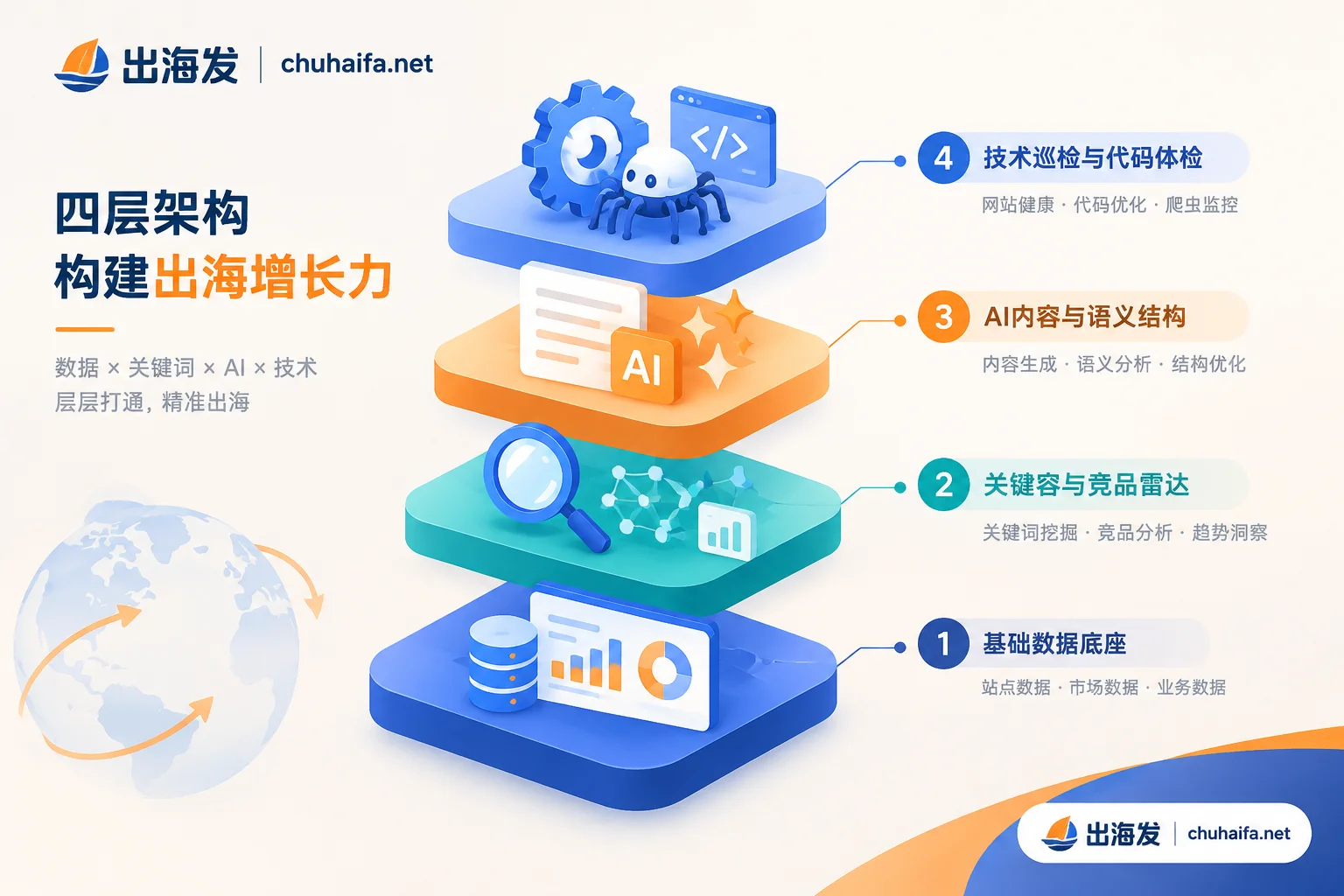
1. Layer 1: Official Data Foundation (Free, Must-Have, Irreplaceable)
This layer centers on Google Search Console (GSC), Google Analytics 4 (GA4), and Google Trends.
Many beginners superstitionally rely on traffic estimates from third-party tools, but overlook that only GSC provides Google's official true cards. Especially after GSC has gradually integrated custom annotations, weekly/monthly aggregated views, and AI search performance reports, whether your pages are indexed and which terms have high impressions but clicks (CTR) are diverted by AI summaries—all rely on this layer for accurate information.
2. Layer 2: Keyword Research and Competitor Intelligence (Find Direction, Disassemble Backlinks)
Representative tools include all-in-one Semrush, Ahrefs, cost-effective SE Ranking, Mangools, Ubersuggest, as well as AnswerThePublic and AlsoAsked specifically for long-tail Q&A mining.
Their job is to "look outward": check global search volume for a term, see which pages of competitors' independent sites gain traffic, and uncover where competitors' backlinks come from—which media or blogs.
3. Layer 3: Content and Semantic Optimization (Address AI Search and Topical Authority)
Representative tools are Surfer SEO, Clearscope, and various AI writing and rewriting tools used in conjunction.
In the AI Overviews era, simply stuffing a few keywords into an article no longer works. Google values structured expression and "Topical Authority" of pages more. These tools scan the top ten ranking pages and tell you which subtopics, entities, and Q&A sections an article needs to cover to be more easily understood and cited by search engines.
4. Layer 4: Technical Inspection and Webmaster Assistance (Troubleshoot, Speed Up, Check Environment)
Representative tools include desktop crawler Screaming Frog, CMS plugins (such as WordPress's Yoast SEO), and everyday web speed tests, webmaster queries, and web archive tools.
They handle "foundation issues": such as dead link detection, canonical tag errors, missing Schema structured data, or mobile ranking drops due to failing Interaction to Next Paint (INP) metrics.
To get a comprehensive view of these official backend entrances, keyword tools, and browser extensions, you can directly search by category in the Google Tools Navigation on Chaihaifa. Each entry links directly to the official website, saving you the trouble of identifying counterfeit links one by one in search engines.
2. Avoid the "All-in-One Suite" Trap: Build Your Tool Stack According to Business Stage
Once you understand the four-layer structure, you'll know why it's unnecessary to buy the most expensive plan right away. Teams at different stages have completely different budgets and energy:
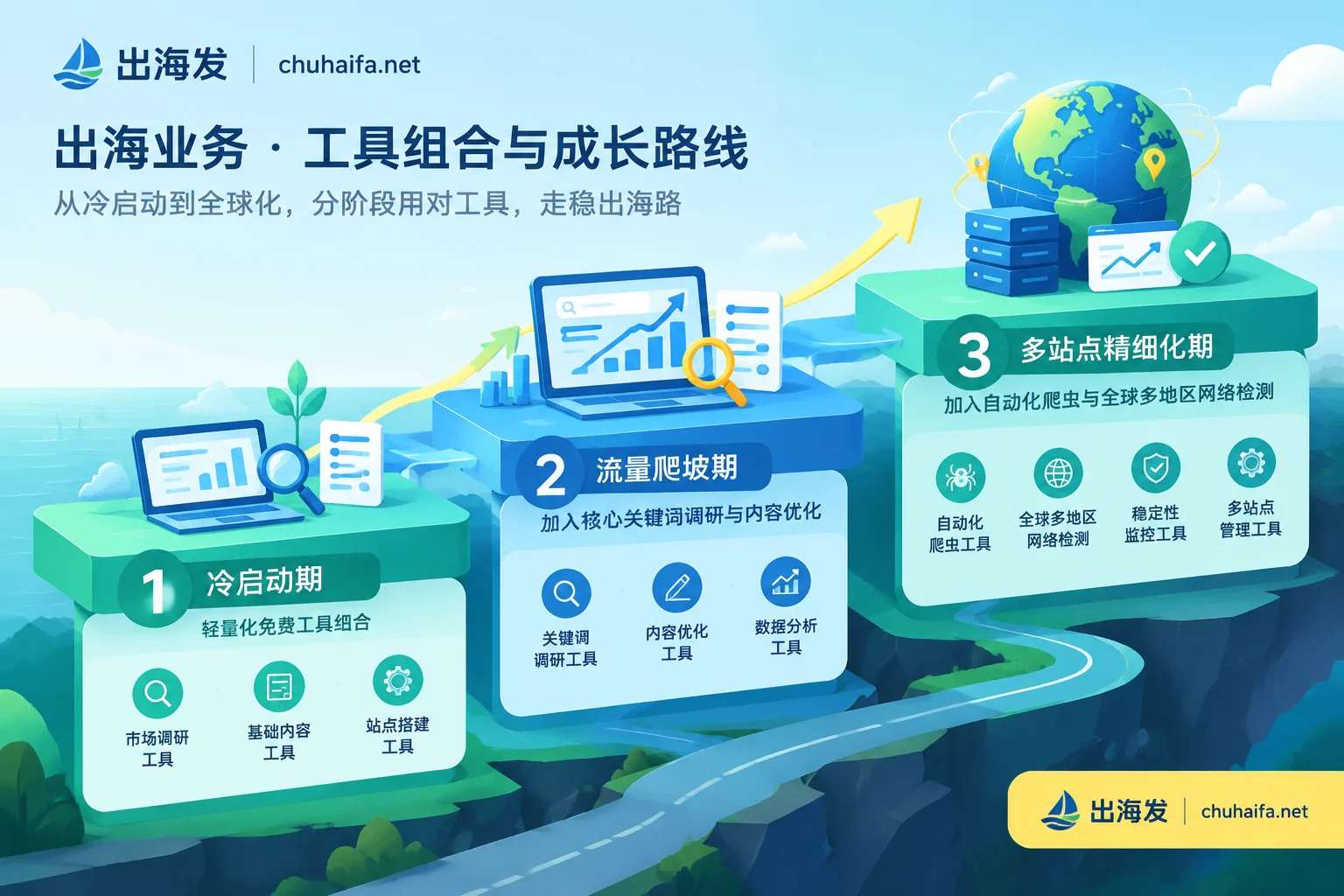
Stage 1: Cold Start and Website Building (0 - 3 months)
At this stage, the website has just launched with fewer than 30 articles. The core task is to let Google crawl smoothly and find the first batch of low-competition, precise long-tail keywords. If you are preparing for a solo or very small-scale website, you can first refer to our previous articles How Many Tools Does a Solo Independent Website Need at Minimum and Which Accounts and Tools Should an Overseas Team Activate in the First Week to get the basic loop running.
How to configure:
- Turn on all official foundations: Bind GSC, GA4, and Google Tag Manager (GTM), and use Google Trends combined with the Keyword Planner in Google Ads to see basic trends.
- Start with lightweight plugins: Install one or two free SEO extensions in your browser (to see search volume and page tags directly on search result pages), and use free-tier Q&A mining tools to find topics.
- Basic webmaster inspection: When the domain has just been resolved and the server is just set up, go to Common Recommendations to use webmaster query tools to check WHOIS information, DNS resolution status, or use web archives to see if the historical records of old domains are clean.
- Money-saving tip: Don't subscribe to annual giant SaaS yet; save your budget for quality content production and basic website building.
Stage 2: Content Expansion and Organic Traffic Ramp-Up (3 - 12 months)
The website starts to have stable impressions. You need to produce product comparison articles and industry guides in bulk, and begin to study why competitors rank first while you are stuck on the second page.
How to configure:
- Introduce one main research tool: Choose one of three among Semrush, Ahrefs, or the more cost-effective SE Ranking. Focus on its Keyword Gap feature: enter three to five competitor websites and directly export keywords they rank for but you haven't written about yet.
- Add AI and content production flow: In the AI Tools channel, pick handy AI writing tools to assist in outlining and organizing multilingual FAQs, then use content optimization tools to calibrate semantic coverage.
- Landing page and speed checkup: Organic traffic is coming but bounce rate is high? Go to the Advertising Tools category to find testing and optimization tools (web speed tests, heatmap analysis) to see if users are stuck on first-screen loading or poor layout.
Stage 3: Multi-Site Matrix and Brand Refinement (Over 1 year)
The number of pages exceeds hundreds or thousands, or the team operates multiple vertical independent sites simultaneously and begins digital PR backlinks and cross-channel search layout.
How to configure:
- Deep technical crawler: Use Screaming Frog to regularly crawl the entire site and monitor structured data (Schema) errors, ensuring product prices, inventory, and reviews can be accurately read by Google and AI search.
- Backlink outreach toolchain: After using an SEO suite to uncover competitor backlink sources, use email mining tools in Common Recommendations to find contact information of editors on those sites, then combine with EDM marketing or influencer outreach tools in Overseas Promotion for batch follow-up.
- Cross-regional SERP real verification: When doing multi-country markets, the rankings you see locally are often affected by geolocation caching. Many teams pair with overseas IP proxies in Overseas Network, or choose NexIP with NexBrowser in Overseas Recommendations, switch to the target country's clean network environment, and manually verify the real search engine results pages (SERPs) and AI Overviews display.
3. When Using Google SEO Tools in 2026, Pay More Attention to These Three New Signals
Even if you buy the right tools, the way you look at data must be updated. Considering recent changes in the Google search ecosystem, it is recommended to focus on three things during daily inspections:
- AI summary interception behind high-impression, low-click terms
In GSC, pull out core informational queries. If you find impressions steadily rising but click-through rate (CTR) suddenly dropping, don't rush to rewrite the entire article. First, search the term on the front end to see if it triggers AI Overviews. If so, the optimization direction is not to change to clickbait titles, but to add clear conclusion blocks, data lists, and structured Q&A at the beginning of the body to strive for your page to become a cited source in AI answers. - Replace isolated short terms with long-tail question strings (Topic Clusters)
Previously, everyone liked to fixate on big terms with tens of thousands of monthly searches; now users are more accustomed to entering complete question sentences into the search box (e.g., "how to choose outdoor waterproof headphones suitable for sports"). When using keyword tools, look more at the "Questions" filter and relevance clustering, and write a set of articles around one core pain point to cater to Google's Query fan-out mechanism. - Bring social media and video assets into the search horizon
Now when users search for a brand or product review on Google, YouTube videos, TikTok short videos, or Reddit discussion threads often appear directly in the top ranks. GSC already supports binding Instagram, TikTok, X, and YouTube as platform properties in the backend to view search performance. When doing SEO, it's worth connecting with social media colleagues on the keyword library—high-intent pain point terms mined in SEO tools can be simultaneously used to shoot short videos, often occupying a second spot on Google's search results page.
Conclusion: Save the Time Spent Finding Tools for Execution
SEO tools themselves won't directly bring you rankings. What really works is every title you change after seeing data, every dead link you fix, and every in-depth review you write.
If you are organizing your team's overseas toolbox and don't want to flip through dozens of scattered bookmarks, you can directly bookmark the Chaihaifa Homepage. Whether it's Google official backends, keyword research software, or AI writing, speed testing, and network environment tools for website building, you can reach the official websites with one click by channel, leaving your energy for business actions that truly bring organic traffic.