

Cross-border E-commerce Platform: Quick Answer and Four Criteria
There is no one-size-fits-all answer to which cross-border e-commerce platform is easier, but there is a fundamental logic: first, look at what rules the platform imposes on you. If your product line is search-driven and your team excels at copywriting, consider starting with Amazon. If your products are more content-driven and impulse-based, and you can consistently produce videos, TikTok Shop may be a smoother start. The reason to reevaluate now is that Amazon enforced new 75-character title rules at the end of July 2026, removed the pre-approval threshold for the Buy Box in July, and TikTok Shop tightened content and entity compliance in early August—these changes point to four criteria: product attributes, team capabilities, rule tolerance, and fulfillment/cash flow.
What the Two Platforms Tightened in 2026: Field Rules vs. Content and Entity Rules
First, Amazon. An official announcement in June 2026 confirmed that starting July 27, except for media categories, product titles will be limited to 75 characters (including spaces) in all scenarios (including mobile). Overlong titles will be automatically truncated or forcibly revised. Meanwhile, from July, the seller performance pre-qualification for Featured Offer (Buy Box) will be gradually removed, and all compliant offers will directly enter the real-time competition pool.
Now, TikTok Shop. The compliance policy announced in early August 2026 states that US sellers can post a maximum of 30 live-selling videos per day and 60 images/text posts. Additionally, during a seller entity change, sales will be paused, and category qualifications must be re-reviewed.
These two types of rules constrain completely different capabilities: Amazon restricts Listing fields and exposure logic, while TikTok Shop restricts content production capacity and entity stability. So don't ask "which has lower barriers," but rather "which barrier can you cross?"
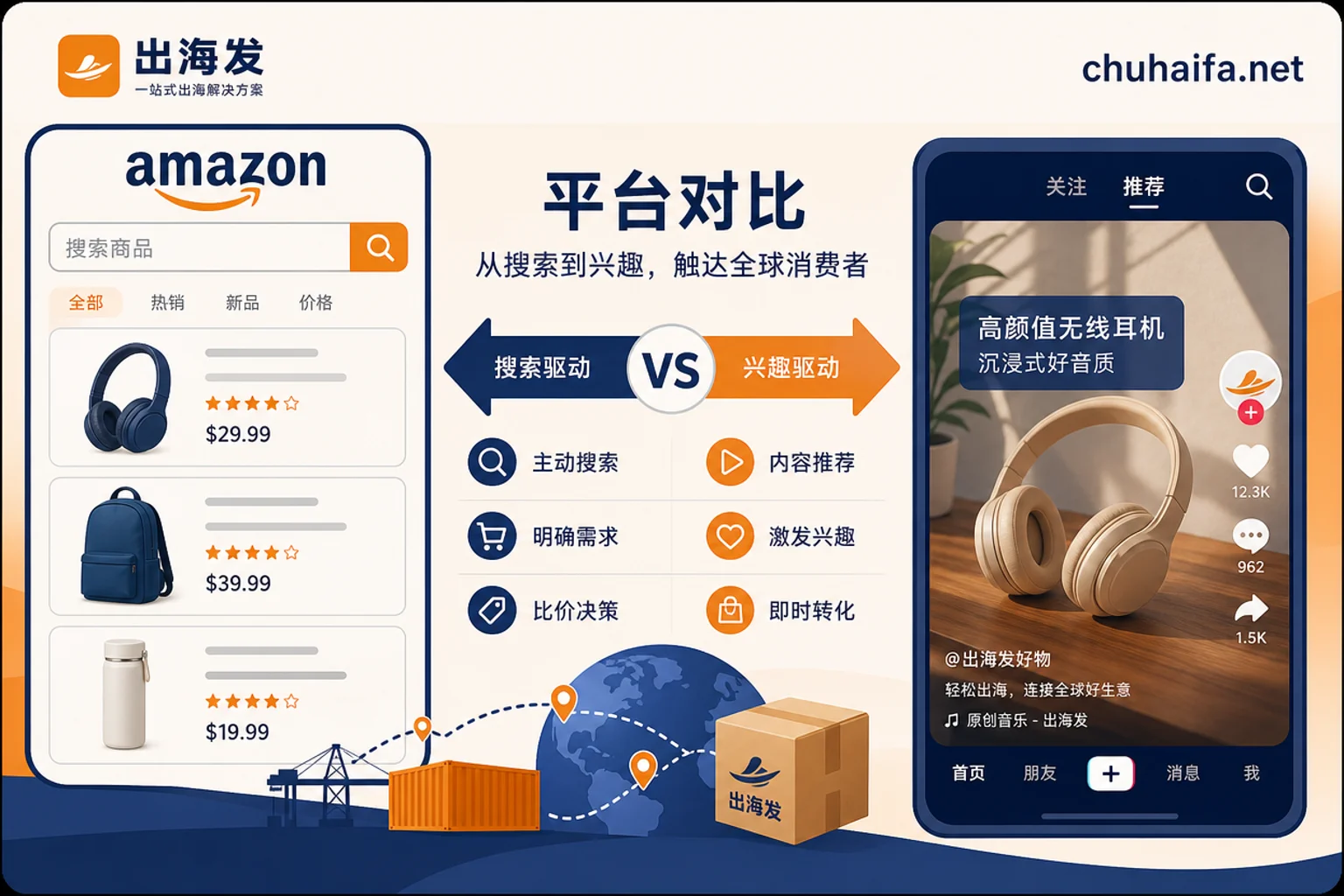
Criterion 1: Product Attributes—Search-driven or Content-Impulse Driven
Ask yourself: do buyers come with a clear need to search and compare, or are they inspired by content and buy on impulse?
| Product Characteristics | Priority Platform | Reason |
|---|---|---|
| Clear function, comparable specs (e.g., 3C accessories, tools) | Amazon | Buyers actively search; titles and keywords determine exposure; precise trade-offs are needed within the 75-character budget. |
| Strong visual impact, impulse buying (e.g., jewelry, apparel) | TikTok Shop | Video production rate and content creativity determine conversion; daily posting limits require steady content supply. |
For search-driven products, within the 75-character budget, put core keywords and differentiating selling points upfront; the practice of stuffing long-tail keywords no longer works. Content-impulse products rely more on video pacing. If your product mix leans content-impulse, you can use TikTok operational tools to plan your content calendar, but tools are aids; your video production capability is fundamental.
Criterion 2: Team Capability—Do You Have People Who Write Listings or People Who Can Appear on Camera and Edit?
Amazon requires people who can do keyword research, rewrite titles within the character budget, and review exposure and conversion. TikTok Shop requires people who can consistently produce short videos and image/text posts at the daily limit and maintain influencer relationships.
Small teams can operate cross-border e-commerce platforms, provided there is clear division of labor: at least one person dedicated to the core capability of the platform. If you're a solo operator, choose the platform that matches your own abilities. Small teams can rely on tools to fill manpower gaps; refer to the cross-border SaaS tools list.
If you plan to run both Amazon and TikTok Shop simultaneously, the minimum is two people: one for Amazon's Listings and ads, and one for TikTok Shop's content and influencers; otherwise, both lines are likely to falter.
Criterion 3: Rule Volatility Tolerance—Title Character Budget, Exposure Competition, and Entity Change Freeze
Cross-border e-commerce platform rule changes come in two flavors: Amazon's are continuous fine-tuning; TikTok Shop's are periodic suspensions.
Amazon's rule changes are continuous fine-tuning: titles may be truncated, and Buy Box ranking changes in real-time. Removing the seller performance pre-qualification doesn't make the Buy Box easier to get; it just puts more offers in the same competition pool, so outcomes depend more on real-time competition in conversion and price.
TikTok Shop's rule changes are periodic suspensions: during entity changes, sales are paused, and category qualifications need re-review. Therefore, plan your entity and category before opening the store to avoid mid-stream changes.
If you can accept daily title optimization and monitoring exposure data, Amazon suits you better. If you want to steadily accumulate content early and can't tolerate sudden suspensions, you need to maintain entity information more carefully with TikTok Shop.
Criterion 4: Fulfillment and Cash Flow Requirements
Ask yourself: how long can you sleep while a batch of goods sits in inventory?
Regarding stocking: Amazon suits sending goods to warehouses; buyers have expectations for delivery speed, so you need certain inventory and cash flow. TikTok Shop is content-driven; a sudden hit can spike orders, so inventory strategy must be flexible. On delivery commitment: search-driven stable sales require consistent fulfillment performance, while content-driven explosive orders test short-term shipping capability. On payment cycles: both tie up capital, so plan ahead. Specific fees and payment terms are set by the platforms; here we only remind: before choosing a platform, calculate your stocking capability and payment cycle.
Two Starting Paths: Single-Platform Deep Dive and Dual-Platform Division of Labor Template
Whichever cross-border e-commerce platform you start with, you only need to run one complete chain during the initial phase.
Path A: Single-Platform Deep Dive
First, run one chain: product selection—listing/video production—fulfillment—review. In the first 90 days, consider three phases: Day 30: complete the 75-character compliance check for initial Listings / or complete the first content script template. Day 60: form a reusable conversion optimization process. Day 90: confirm whether the fulfillment and payment cycle of the single chain can withstand scaling.
Path B: Dual-Platform Parallel Operation
Supply chain, customer service, and content raw materials are shared, but Amazon's title/keyword system and TikTok Shop's content calendar and posting limits must be managed separately.
| Task | Amazon | TikTok Shop |
|---|---|---|
| Title | Titles must be within 75 characters | Product names can be longer but need to match video copy |
| Content | High-quality images and A+ | 30 videos / 60 image-text posts per day |
| Fulfillment | Monthly self-check of Offer compliance | Monitor shipping lead time during spikes |
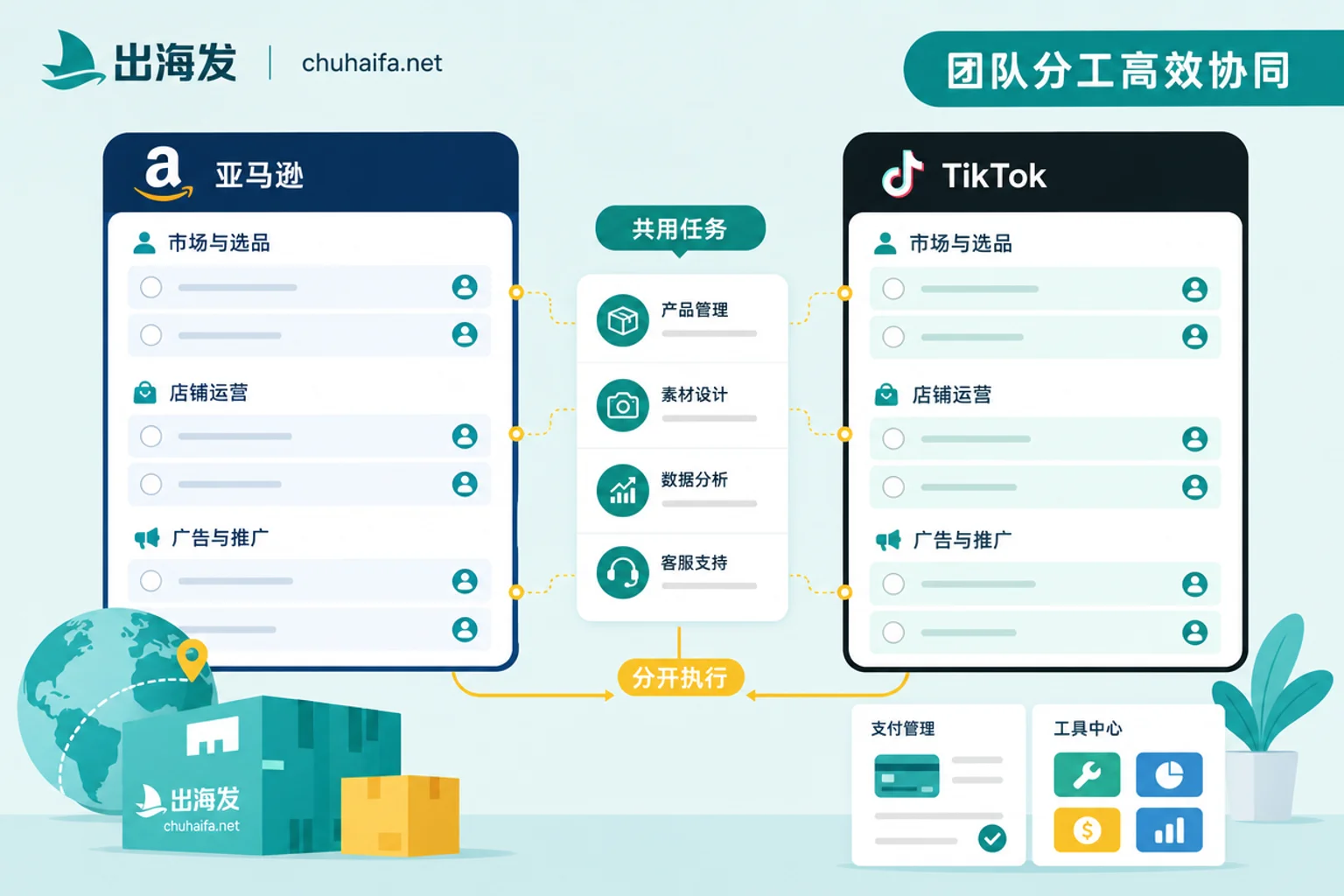
Common Misjudgments: Directly Replicating One Platform's Playbook to Another
Misjudgment 1: Bringing long-title keyword stuffing habits into the 75-character budget.
Correct approach: choose the most important keywords and selling points, put information upfront, and discard long-tail words.
Misjudgment 2: Thinking "if you perform well, you automatically get the Buy Box."
Correct approach: treat it as real-time competition, not a qualification achieved by meeting criteria.
Misjudgment 3: Using a catalog-heavy approach to deal with daily posting limits.
Correct approach: prioritize quality over quantity, focus on high-converting content.
Misjudgment 4: Changing your operating entity arbitrarily after opening the store.
Correct approach: confirm entity and category qualifications before opening the store to avoid freezes.
Pre-Opening Self-Checklist and Resource Navigation
Before deciding on a cross-border e-commerce platform, check off each item on this list:
- [ ] Product attributes are clear (search-driven or content-driven)
- [ ] At least one person matches the core capability of the platform
- [ ] Entity and category qualifications are verified, with no changes in the near future
- [ ] Sufficient stocking capital and logistics contingency plans
Chuhaifa continuously collects and maintains resources in four categories: product selection and data, content creation, logistics and fulfillment, and store management. You can directly use them based on your chosen platform, referring to the cross-border e-commerce tools classification. Chuhaifa only provides navigation; the choice ultimately depends on your product line and manpower.
FAQ
As a beginner, should I choose Amazon or TikTok Shop?
It depends on your product line and content capabilities. For products with clear demand, choose Amazon for search traffic; for products that can produce visual content, choose TikTok Shop for impulse buying. We recommend testing one product first, running the process, and then scaling.
What happens if an Amazon title exceeds 75 characters?
The system will automatically truncate or forcibly revise it, causing key information to be lost, affecting clicks and conversion. So, after the new rule, you must put the most important words first and delete repetitive and redundant words.
Which has lower barriers, TikTok Shop or Amazon?
The nature of barriers differs, and there is no universal high or low. TikTok Shop's barriers lie in content production capacity (daily limit of 30 videos and 60 image-text posts requiring steady supply) and entity stability. Amazon's barriers lie in keyword research and field trade-offs within 75 characters.
Will a TikTok Shop seller entity change affect the store?
Yes. During the entity change, sales will be paused, and category qualifications will need re-review. It is recommended to determine the entity before opening the store. If a change is necessary, allow time for review.
How do I get the Amazon Buy Box?
Amazon has removed the seller performance pre-qualification for Featured Offer, and compliant offers will directly enter real-time competition. The official specific ranking weight has not been disclosed, so the controllable approach is to keep your Offer compliant, maintain price and fulfillment conditions at competitive levels, and continuously observe your Offer's actual acquisition.