
To choose a cross-border logistics tool, you don't need to try every one. Just check whether the five criteria—stocking location, label speed, tracking pushback, exception interception, and multi-site switching—are sufficient to cover the 48-hour fulfillment window. TikTok Shop is rolling out new fulfillment rules in 2026, compressing the shipping time for regular orders from 4 business days to 2 business days, meaning orders must be updated to "in transit" within 48 hours. Below, we break down each criterion and provide actionable self-check methods.
How Is Fulfillment Time Determined? The Steps from Order to "In Transit"
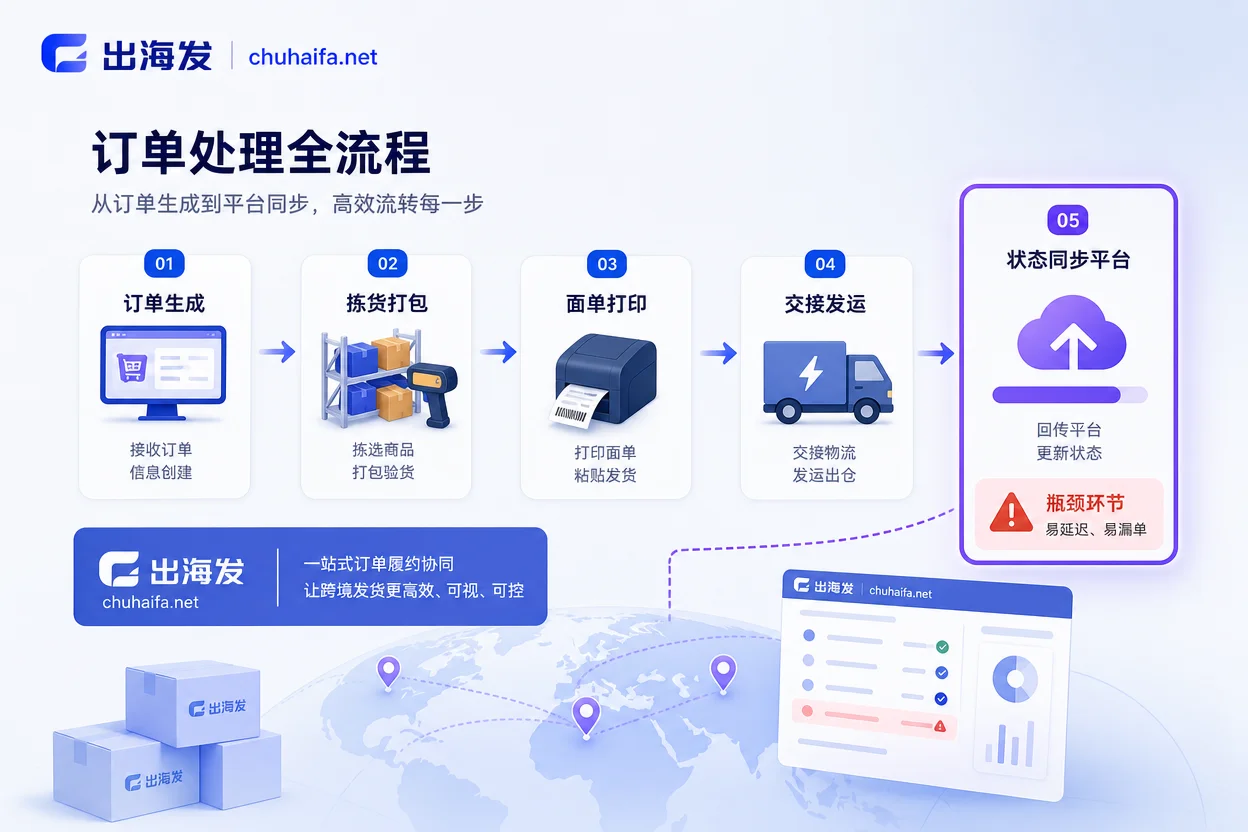
The 48-hour pressure isn't on trunk transportation; it's stuck in three segments of the order processing chain: order generation, handover, and status pushback. TikTok Shop's official rule requires "shipping time," meaning orders must be updated to "in transit" within 48 hours. However, the specific measurement basis (e.g., whether the clock starts at payment time, whether weekends are included) follows the latest platform backend rules.
Cross-border logistics tools can mainly influence the order generation and pushback segments: order generation covers from order creation to obtaining the shipping label and completing picking/handover; pushback refers to syncing the tracking number and status to the platform. Many sellers think "shipping" means handing goods to the logistics provider, but the platform actually checks whether the system status has changed to "in transit." If the tool doesn't push back the status promptly after handover, the goods may be shipped but still be deemed late.
Criterion 1: Stocking Location Determines Maximum Fulfillment Speed—Where to Draw the Line Between Overseas Warehouse and Direct Mail
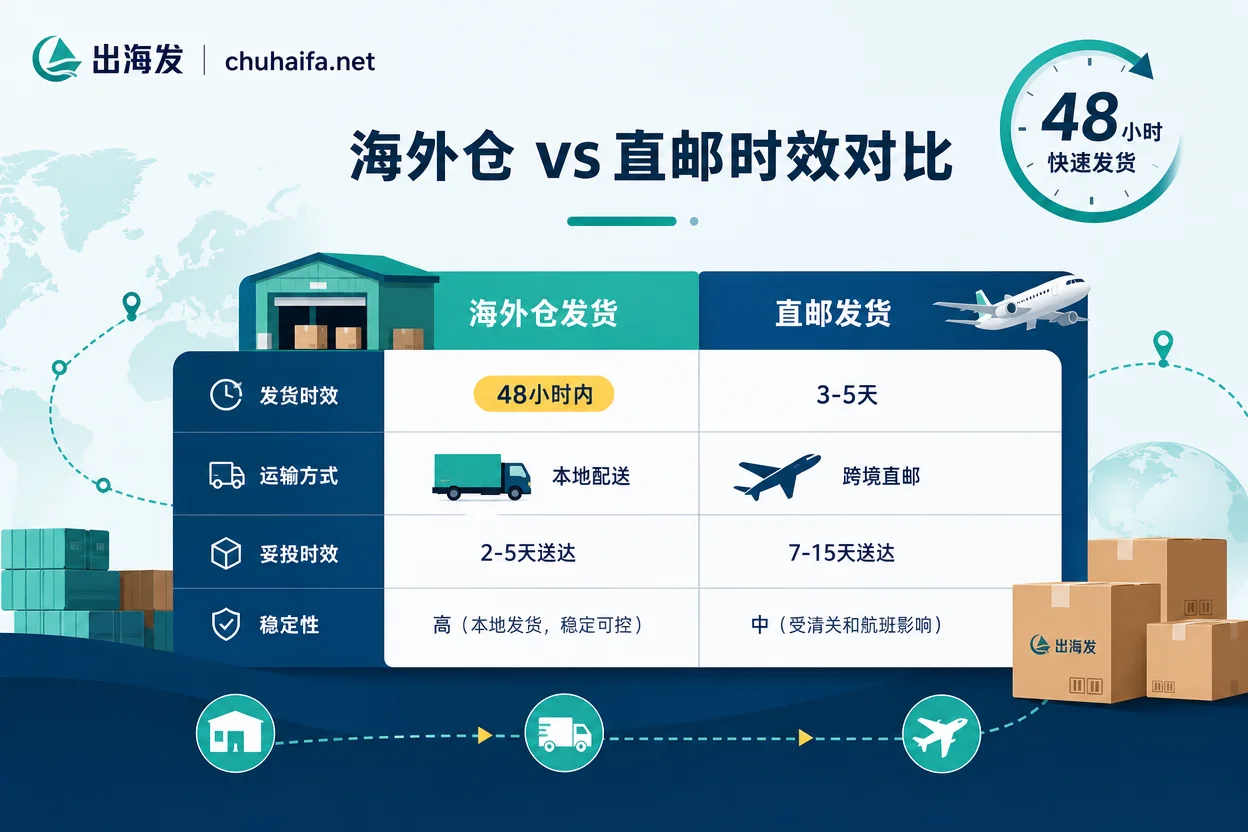
To answer "Which ships faster, overseas warehouse or direct mail?": If goods are in China, direct mail almost certainly cannot reach "in transit" within 48 hours (except for certain high-cost air freight options, but that depends on actual carrier transit times); stocking location directly determines the maximum fulfillment speed. So, when evaluating whether a cross-border logistics tool can meet the 48-hour requirement, first check if it supports overseas warehouse stocking, placing goods in local warehouses in the sales market.
The industry widely observes TikTok Shop pushing local fulfillment in Europe, but the official public announcement only sets the 48-hour shipping requirement as a hard rule; specific countries and dates for warehouse openings should follow platform announcements. For sellers, the self-check action is: analyze each SKU's sales stability and volume, and pre-stock stable-selling, small, high-margin products to overseas warehouses; keep bulky, slow-moving items for direct mail. Different cross-border e-commerce platforms have different measurement rules for local warehouse vs. direct mail, so confirm the target site's rules before choosing a warehouse.
Criterion 2: Label and Pre-advice Speed—Can Multi-Platform Orders Be Labeled in One Go?
Multi-platform sellers' biggest headache is "how to print labels for orders from multiple platforms uniformly." To evaluate whether a cross-border logistics tool qualifies, check four points: whether it supports consolidating orders from multiple stores/platforms and batch number retrieval; whether label templates can auto-match by platform; whether the average time from order to number retrieval is in minutes; and whether there's a fallback plan in case of API failures (like manual number upload).
Small teams can do a sampling timing test: during peak order hours, randomly select 10 orders, from clicking "ship" in the system to obtaining the label, record the average time and compare it with manual operation time. If batch processing doesn't reduce per-order time to a fraction of manual, the batch capability is nominal. Additionally, even if multiple platform orders are unified under one label template, different platforms have different requirements for carrier codes, so the tool must automatically map them; otherwise, number pushback will fail.
Criterion 3: Timing of Tracking Pushback—What to Do When System Shows Shipped but Platform Doesn't Recognize?
Regarding "Can cross-border logistics tools automatically sync tracking numbers?" The answer is yes, but the pushback timing and matching mechanism must be correct. Many sellers encounter "system shipped but platform status unchanged," usually due to two reasons: one is delayed number pushback; the platform requires updating to "in transit" within 48 hours, and if you push back at the 47th hour, a network glitch could cause a timeout; the other is that the tracking number doesn't match the platform's carrier code, so the platform doesn't recognize it.
Pre-launch verification checklist: First, confirm the tool supports automatic pushback for your carrier's tracking numbers. Second, check whether pushback is "immediate after handover" or "scheduled daily"; scheduled pushback is high-risk under the 48-hour rule. Third, see if the tool alerts and auto-retries on pushback failures. If the tool doesn't support immediate pushback, it's disqualified as a primary logistics solution.
Criteria 4 and 5: Exception Order Interception Capability and Multi-Site Fulfillment Switching Cost
Under the 48-hour window, exception orders are the most time-consuming. Out-of-stock items, incomplete addresses, and order merging/splitting can cause orders to get stuck in the system. A good cross-border logistics tool should support exception interception: auto-flag and notify restocking when out of stock; block order generation and prompt address correction when the address is invalid; automatically split labels and tracking when orders are merged/split. Self-check method: create a test order, deliberately use an invalid address, and see if the system intercepts and prompts before printing the label, rather than printing an incorrect label.
Multi-site fulfillment switching cost refers to whether you need to reconfigure when switching warehouses or carriers across sites like TikTok Shop Southeast Asia and Europe. For example, TikTok Shop Southeast Asia will implement limited distribution penalties for low-engagement and misleading videos starting March 30, 2026. Such content directly affects traffic, which in turn affects inventory consumption speed. Content-side traffic fluctuations can be monitored using TikTok operations tools to avoid disconnection between inventory consumption pace and stocking plans. More critically, Thailand site will adjust the transaction fee base starting March 21, 2026, to "buyer's actual payment + platform subsidies," meaning fees also apply to the subsidy portion. This implies that refunds and reshipments due to fulfillment exceptions will amplify costs at the order volume level. So, multi-site sellers should check whether the fee calculation module includes platform subsidies in the base and whether configurations can be reused with one click when switching sites.
Tool Combination Paths for Three Cargo Types: Light Small Items, Large Items, and Multi-SKU Long Tail
Different cargo types suit different tool combinations; you don't need one system for everything.
| Cargo Type | Stocking Strategy | Tool Focus | Typical Combination |
|---|---|---|---|
| Light small items (<200g) | High proportion of overseas warehouse pre-stocking | Batch label printing, immediate tracking pushback | Overseas warehouse ERP + label tool |
| Large items (volume weight) | Mainly direct mail + overseas warehouse transit | Exception interception, freight rate comparison | Logistics management system + customer service tool |
| Multi-SKU long tail | Layered stocking by sales volume | Multi-platform order consolidation, rule configuration | Cross-border e-commerce tool + overseas warehouse WMS |
If shipping time isn't meeting standards, the remedial order should be: first ensure the status pushback chain (confirm tracking numbers sync promptly), then adjust stocking structure (pre-stock bestsellers to overseas warehouses), and finally consider changing carriers. Because pushback is the direct basis for platform determination, stocking is the physical limit, and carriers are just an intermediate variable.
Cross-Border Logistics Tool Self-Check Checklist
Condense the five criteria into a checklist for you to tick off against your existing system:
- Does it support overseas warehouse stocking in the target market, and can you switch warehouses without rebuilding products?
- Batch number retrieval and label template auto-matching: actual measured time from order to number retrieval is significantly lower than manual per-order operation time.
- Tracking pushback is immediate, with failure alerts and auto-retry.
- Out-of-stock and invalid address orders can be automatically intercepted without generating incorrect labels.
- Multi-site (US, Europe, Southeast Asia) fulfillment rule switching configurations are reusable.
This checklist can serve as a long-term reusable evaluation dimension table for cross-border logistics tools. If the current solution fails on any criterion, you can go to ChuhaiFa's cross-border logistics and cross-border SaaS tool categories and compare alternatives horizontally using the same five dimensions. ChuhaiFa only categorizes resources; it doesn't make selection decisions for you.
FAQ
How is TikTok Shop's 48-hour shipping time calculated?
It's based on the order status being updated to "in transit" within 48 hours for regular orders. However, the specific start point and whether weekends are included depend on the latest platform backend rules, and the tool should allow you to check remaining time at any moment.
System shows shipped but platform status hasn't changed. What should I do?
First check if the tracking number matches the platform's carrier code, then see if the tool has immediate pushback enabled. If pushback fails, manually enter the number and keep proof. If this happens frequently, the tool is disqualified.
Which is faster: overseas warehouse or direct mail?
Overseas warehouse is faster because goods are already local, allowing immediate handover and status pushback; direct mail requires domestic transportation, making it nearly impossible to reach "in transit" within 48 hours. However, overseas warehouses have storage costs and suit stable-selling, small-sized SKUs.
Can cross-border logistics tools automatically sync tracking numbers?
Yes, but pay attention to pushback timing and compatibility. Tools that support major carriers, immediate pushback, and automatic retry on failure are reliable; otherwise, manual intervention is needed.
Will late shipment affect my score?
The platform hasn't publicly released a unified penalty value for timeout; specific measures follow the latest platform backend rules. Practically, the safest approach is to use tools to ensure the status updates to "in transit" within 48 hours.
How to print labels for multi-platform orders uniformly?
Use a cross-border e-commerce tool that supports multi-store integration, consolidates orders, and batch retrieves numbers, automatically matching label templates across platforms. The measured time from order to number retrieval is a key metric.
Is the cost of switching fulfillment rules across multiple sites high?
It depends on whether the cross-border SaaS tool you choose supports configuration reuse. For instance, TikTok Shop Southeast Asia and Europe have significantly different rules; if you have to reconfigure every time, the cost is high.