

To judge whether an overseas payment tool is reliable, check only four conditions: licensing qualifications, settlement entity consistency, clearing channel type, and documentation chain completeness. Fees and settlement speed should rank last. The Q4 preparation guide released by Yucai Cross-border in August 2026 reminds that as global cross-border tax and AML regulations tighten, traditional personal accounts and unlicensed intermediary channels face risks of tax back payments, penalties, and even fund freezes. Cross-border sellers need to reverse the entire verification order before peak season volume: safety first, speed second, cost last.
Step 1: Verify Licensing Qualifications—What to Check and Where
Why is licensing the first priority? Because unlicensed intermediary channels face the highest risk under tightening AML and cross-border tax supervision. If the channel is frozen, the entire payment batch gets stuck. The verification method is actually quite transparent:
- First, confirm the operator location declared by the service provider, find the license registry of the corresponding regulatory body (e.g., the Money Service Operator license under Hong Kong Customs, the MSB registration with the US FinCEN), and see if the company is listed. Different locations correspond to different regulators and registries; refer to the current registry on the official website of the regulator in the declared operating location.
- Then check whether the licensed entity name in the registry exactly matches the contracting entity in the contract. Many problems stem from inconsistencies between nominal and actual operations.
- Finally, request the license number and verify it independently on the official website, not just rely on screenshots of certificates on the provider's site.
Here we only describe verification methods, not make any judgment on the licensing status of any specific platform. If you are still unclear about how to check licenses, a comparison of independent site payment tools can be found at Stripe vs. PayPal for Independent Site Payments, but the key point remains: better to spend an extra half-day searching the regulatory registry than to gamble during peak season.
Step 2: Verify Settlement Entity Consistency—Three-Way Alignment is Stable
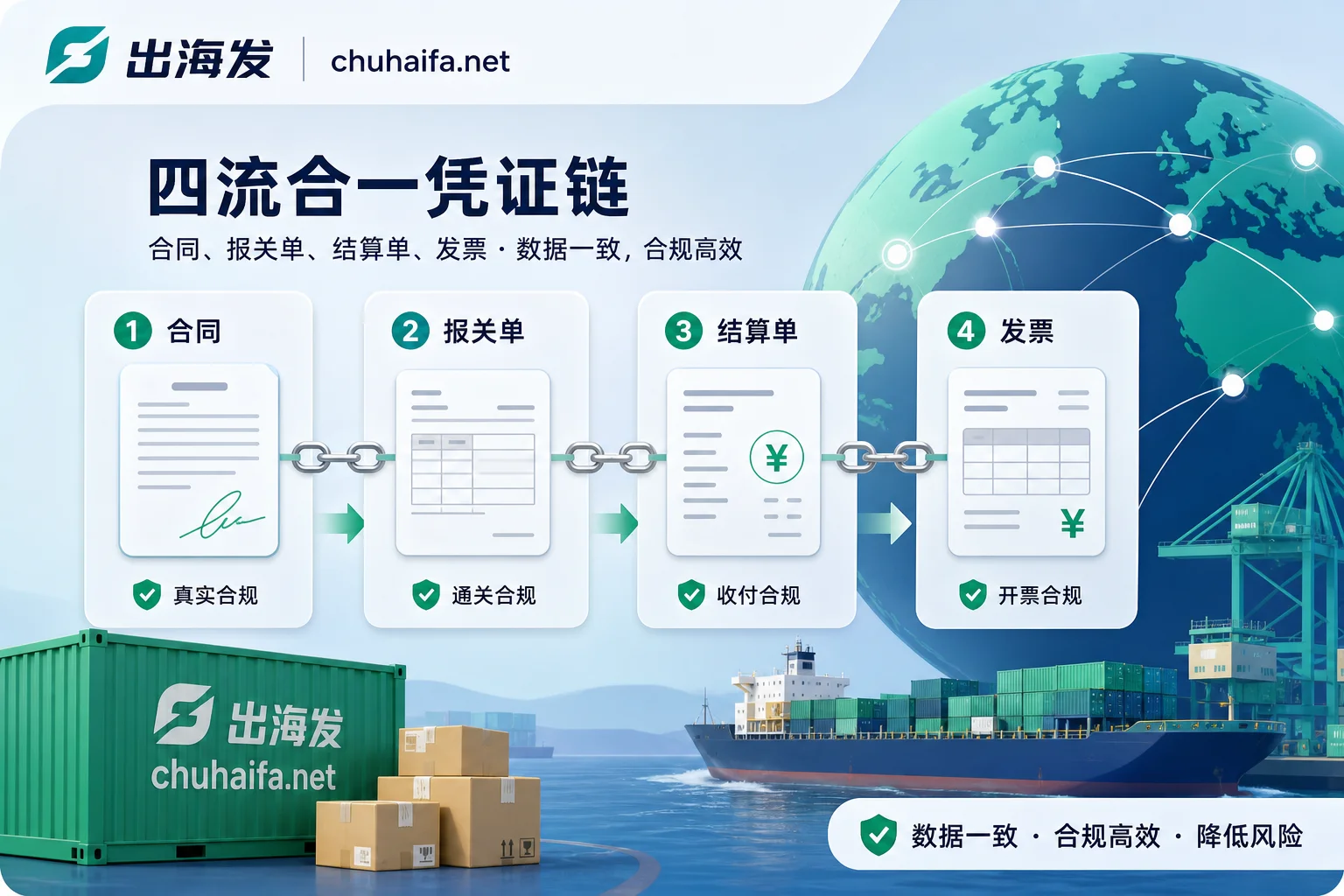
Many sellers ask: can I receive payments if the company entity and store entity don't match? Under the "four flows in one" cross-verification, the answer is high risk. The so-called four flows are: contract flow, goods flow, cash flow, and invoice flow must align. Specifically at the payment stage, the contract signer, the platform store registration entity, the payment account holder, and the final settlement entity must point to the same legal entity.
Common mismatches include: registering a store in a personal name but using a company account to receive payments, using an affiliated company account to collect on behalf, or having store and payment account under different legal persons. These may go unnoticed normally, but during peak season or when risk controls trigger, if cash flow and contract flow don't match, the documentation chain breaks.
Self-check method: List the store backend's entity info, the account opening entity of the payment account, and the signatory on the settlement agreement in a table. If any three don't align, adjust as soon as possible. If you use a Hong Kong company entity, you can refer to the approach in Cross-border Payment Platforms for Hong Kong Company Entities to re-organize.
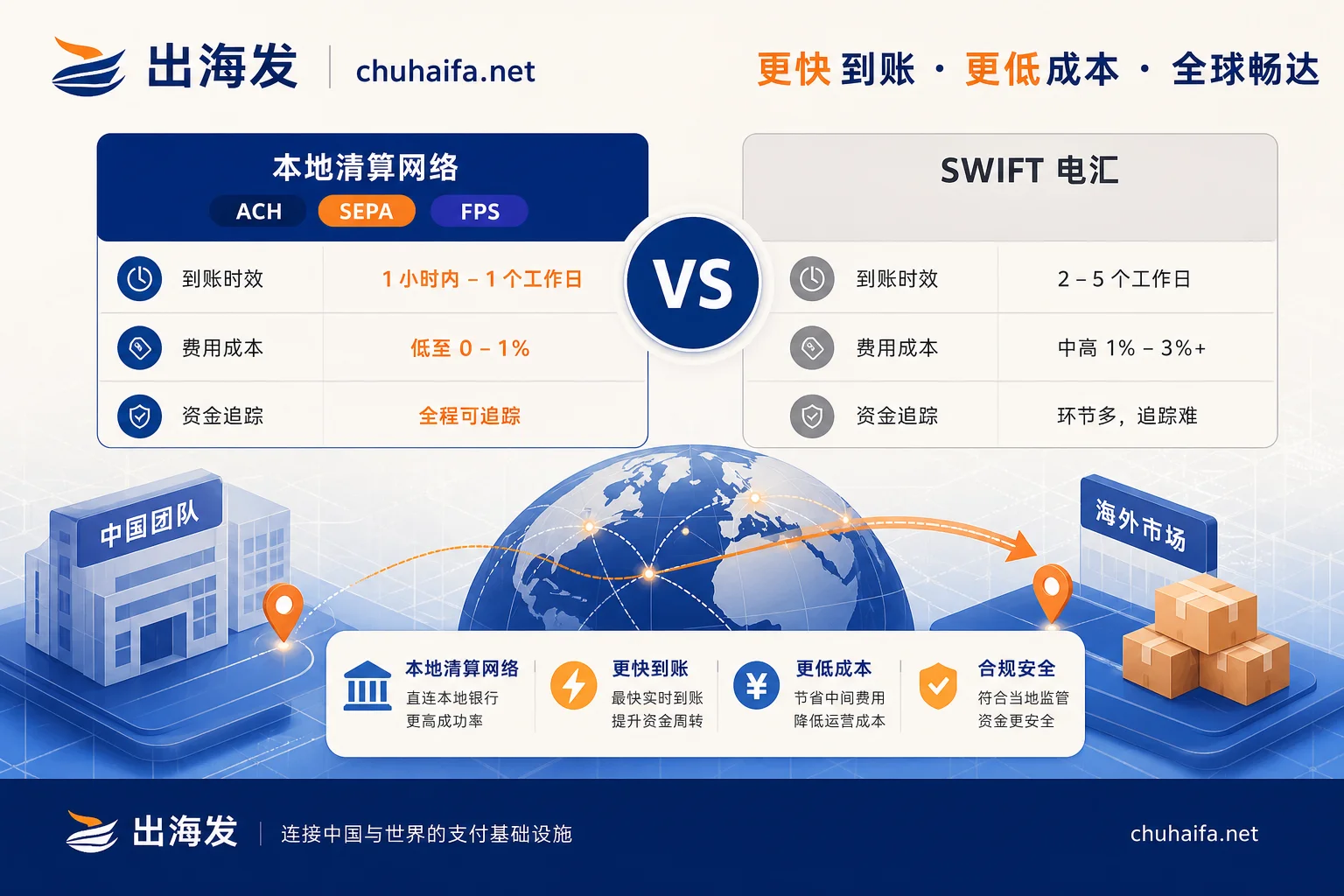
Step 3: Verify Clearing Channel Types—Which Local Clearing Networks Do Overseas Payment Tools Support
The local clearing networks supported by overseas payment tools directly determine your settlement speed and intermediate costs. The differences between the two mainstream routes are significant:
| Comparison Dimension | Local Clearing Networks | SWIFT Wire Transfer |
|---|---|---|
| Typical Networks | US ACH, Europe SEPA, UK FPS | Global interbank wire transfers |
| Clearing Path | Direct connection to target country's clearing system | Multiple correspondent banks + currency conversion |
| Standard Settlement Time | 0–2 business days | 2–5 business days |
| Intermediary Bank Fees | Usually waived | Usually deducted |
| Suitable Scenarios | Local collection in major currencies | Non-mainstream currencies, cross-regional settlement |
However, note that local clearing networks cannot completely replace SWIFT for all currencies and regions. For example, some non-mainstream currencies or specific cross-regional settlements still rely on multi-tier correspondent banking networks. So when choosing, first list your primary collection markets and currencies, then work backwards to identify the needed route: if you mainly collect USD in the US market, prioritize checking for ACH; if customers are scattered across Europe, SEPA coverage is crucial; for the UK market, confirm FPS support. Verifying this can save several business days during peak season.
Step 4: Verify Documentation Chain—Can You Prove Yourself When Volume Surges in Peak Season
"How to handle requests for proof of fund source" is the most common question in Q4. According to the practical guide from the AllBright Cross-border Committee in January 2026, when peak season withdrawals suddenly increase and trigger risk controls, submitting simple screenshots is useless. You must provide a complete documentation chain.
The four flows in one require you to consistently produce four types of materials:
- Contract flow: Purchase or sales contracts with suppliers or customers;
- Goods flow: Customs declarations, shipping bills;
- Cash flow: Platform settlement statements, payment institution account statements;
- Invoice flow: Corresponding invoices or proforma invoices.
So, archive these materials by order number before peak season, not when risk controls come and you're scrambling through email. As for "will suddenly large withdrawals trigger risk controls"—if funds are genuine and documentation complete, large withdrawals are just routine review; but if documentation gaps are obvious, you may face delays or even freezing.
Why Private Accounts and Non-Compliant Intermediaries Are No Longer the Easy Option
"What are the risks of using personal accounts for cross-border payments" is a question many small teams still debate. On the surface, private accounts are more discreet and have lower fees, but under penetrating supervision, this is a false proposition.
First, with multi-department data interconnection, long-term use of private accounts not only disqualifies you from legal export tax rebates and exemptions, but can also trigger large back taxes, penalties, and even account freezes. Second, AML enforcement is highly sensitive to personal accounts with frequent foreign currency receipts; once flagged, the entire fund chain is scrutinized. Third, private accounts cannot provide legal settlement vouchers, making future compliance very passive.
So, if your team is still using friend accounts or private intermediaries, the final switch window is before Q4 peak season. Don't wait until funds are frozen to fix things; by then you lose not just money but also the entire peak season momentum.
Channel Configuration Paths for Three Team Types
Different team structures have different compliance weaknesses in overseas payment tools:
Single-store independent sites: Focus on checking local clearing coverage for primary markets, e.g., ACH for US, SEPA for Europe;
Multi-platform sellers: Prioritize resolving consistency between multiple store entities and settlement entities, avoiding mismatches like A store collecting and B entity settling;
Brand teams with overseas entities: The challenge is connecting overseas accounts with domestic settlement vouchers, especially ensuring correspondence between overseas company contracts, invoices, and domestic customs declarations.
Each type often gets stuck at "the most problematic step," so run the four-step checklist first, then fill gaps.
Pre-peak Season Overseas Payment Tool Self-check Checklist: Check Off Each Step
Compress the above into an immediately executable checklist with pass criteria:
| Check Item | Pass Criteria | What to Do If Not Pass |
|---|---|---|
| Licensing | Found in regulatory registry, entity name matches contract | Contact customer service for license number, or switch tools |
| Entity Consistency | Store entity, account holder, settlement entity aligned | Change account or store entity as soon as possible, avoid cross-entity collection |
| Channel Match | Primary market has local clearing coverage, or accept SWIFT timing | Re-select supported channels based on main currencies |
| Documentation Chain | Every large transaction has contracts, customs declarations, settlement statements | Archive by order before peak season to form complete chain |
This checklist also corresponds to the "overseas payments" category on ChuhaiFa. You can compare candidate tools across three categories: "licensed payment providers, local clearing channels, settlement and reconciliation tools". For further reading, refer to How Long Does Cross-border Payment Take to Arrive and How Are Cross-border Payment Fees Calculated. When comparing candidates, return to the ChuhaiFa overseas payments section and filter by those categories.
FAQ
How to check if a cross-border payment platform has a license?
First, identify the platform's declared operating location, then check the official registry of the corresponding regulator, such as Hong Kong Customs' Money Service Operator license or US FinCEN's MSB registration. Compare whether the entity name in the registry matches the contract signer, and request a license number to verify independently. Note that official registries are authoritative, not website screenshots.
Can I receive payments if company entity and store entity mismatch?
Yes, but the risk is high. Under four-flow verification, cash flow and contract flow won't align, and the documentation chain breaks easily during peak season or risk controls. Adjust the store entity, account holder, and settlement entity to be consistent as soon as possible. If changes are temporary, at least retain complete authorization and transaction proofs.
What should I prepare if asked for proof of fund source?
Prepare the four-flow documents: purchase contract (contract flow), customs declaration (goods flow), platform settlement statement and payment institution statement (cash flow), and corresponding invoice (invoice flow). Simple screenshots are invalid; provide original files. Archive by order before peak season, don't wait until asked.
Will sudden large withdrawals during peak season trigger risk controls?
Yes, they will trigger review, but if transactions are genuine and documentation complete, it usually just delays settlement, not freezing. If documentation gaps are obvious, you may be asked to supplement or even have withdrawals suspended. So before large withdrawals, self-check the documentation chain.
Can local clearing networks fully replace wire transfers?
No. Local clearing networks (like ACH, SEPA, FPS) are faster and cheaper for major currencies in specific regions, but non-mainstream currencies or certain cross-regional settlements still require SWIFT. When choosing, work backwards from your primary markets; a mix is safer.